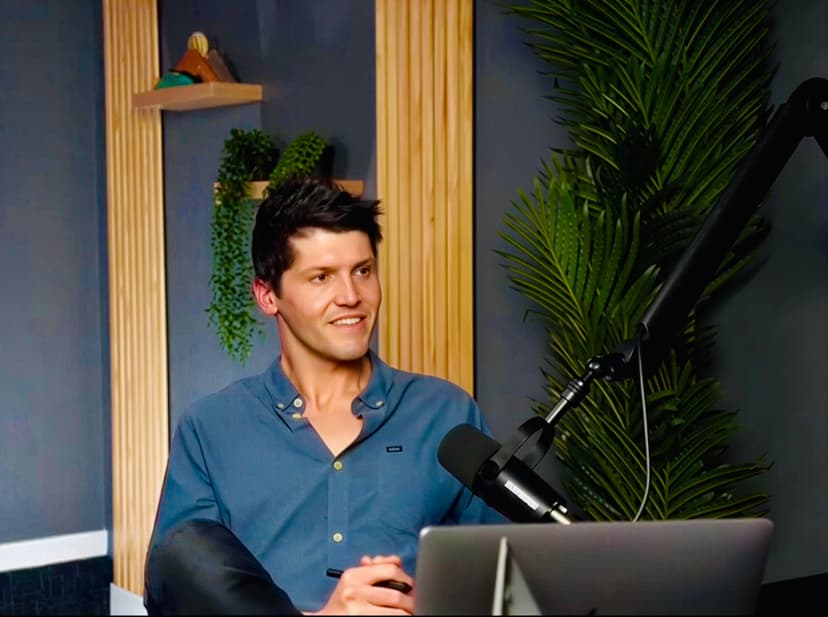
Jeremy Ciampa
Founder of Higher Learning Test Prep and The 1600 Game. Twenty years preparing students for the SAT and ACT across five continents.
I've been teaching the SAT one student at a time for twenty years. Across that time the test itself has changed. Different sections, different question types, paper to digital. The work hasn't. The work is figuring out, for a specific kid, why a specific score is where it is and what specifically needs to happen to move it.
That's a lot of sitting across a table from a sixteen-year-old. It's a lot of noticing: which question they got wrong, what they did with their pencil before they got it wrong, what they said when I asked them to explain their reasoning. The SAT rewards a very specific kind of pattern recognition, and the surest way to teach it is to do it next to someone every week and point out the patterns as they appear.
The 1600 Game is software that does this work at scale. Built on the assumption that what works at the table can be encoded: the Socratic move, the strategic plan, the way you decide what to drill on a given week. If you're willing to be specific about it.
I grew up the son of an educator. My father taught high-school math and coached hockey, and somehow he knew how to connect with every kind of kid in the building. The punks who needed a mix of care, attention, and tough love just to graduate; the regular fun-loving jocks; and the Harvard-bound kids he coached through test prep after calculus class. I watched a lot of that, growing up.
I got a scholarship to Phillips Exeter after a near-perfect SSAT, fell in love with improvised music and jazz there, and ended up accepted to Berklee for music and Bowdoin for hockey. My parents said they'd pay for anything except a music degree. I went to CU Boulder, partly because a band there needed a guitar player. I started as a Bio major and switched to English along the way, because I kept asking why more than how.
Most of my twenties were playing guitar in bars and clubs. Rock bands, swing-dance bands, jazz groups. I taught test prep on the side: first one-on-one, then small groups, then large seminars. Eventually I built the whole tutoring practice on Skype so I could teach from the back of vans and green rooms while bumming around with scrappy bands and going on rock climbing and ski mountaineering trips. That sounds like a joke. It was not a joke.
I started Higher Learning Test Prep in 2011, at 26. Almost nobody else was teaching this way, so I blogged a lot, ended up near the top of Google search results for SAT prep, and started taking students from everywhere. Twenty years later, I've sat across the table, virtual or otherwise, with students from:
That's where the “five continents” line comes from. I wasn't trying to become a global tutor. It just kept happening. Partly because Skype was novel, partly because if you sit at the table with enough sixteen-year-olds, word gets around.
When I met the Queen of my dreams, I told her I'd always be a barefooted guitar player. Nothing more. She knew better.
When our first child was born, my focus shifted. I didn't want to miss bath time, and the gig-to-diaper cost ratio was working against me. I also started to think about tutoring as something more meaningful than I had before. Most people teach the SAT for a few years and move on. I had taught it long enough, by then, to know the test about as well as anyone on the planet.
So I built The 1600 Game to give that knowledge away as widely as I can.
Test prep is a mercenary industry, and my mission is to take everything I have learned across twenty years at the table and put it in front of any student willing to do the work. It is an honor to help a young person accomplish something great. If I can help one kid kick down the door to their dream school, who knows what they do next.
- I.
On what the test rewards
The SAT is not measuring effort. It is measuring whether a student has noticed the patterns the test reuses. The cheapest way to move a score is to teach the patterns directly, then practice against them.
- II.
On the Socratic move
Telling a student the answer teaches them nothing. Asking them the next-most-useful question teaches them the strategy that got there. Every minute of teaching I've ever done is some version of finding that question.
- III.
On scale
Twenty years of tutoring taught me the same set of moves matter for almost every student. The 1600 Game is what happens when you write those moves down, carefully, and let a piece of software apply them to anyone who shows up.
Jeremy lives in Colorado with his family. He is also building Ewald Hall: a walled garden for literati and a laboratory for life of mind.